












[Olympia] IRON SCHOLARS KICKOFF 2026–2027: Unlocking Potential for a New Journey
Date Submitted: 22/08/2026
August is not only the time when students return to school, but also a transition period for them to warm up their thinking, reconnect with prior knowledge, and prepare for a new school year. After three weeks of reviewing what they had learned, particularly the foundational knowledge of the Cambridge program, SOers took on a special challenge: Iron Scholars Kickoff 2026–2027.
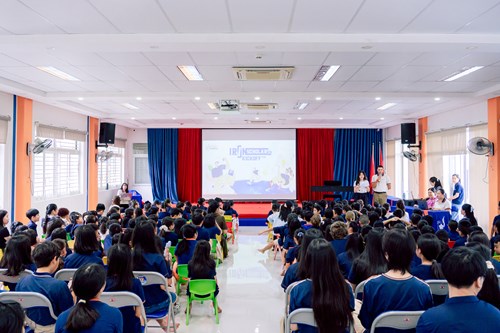
Iron Scholars Kickoff 2026–2027 is an academic competition that gives students an opportunity to review and assess the knowledge and skills they have developed during the first three weeks of the August Back to School period.
Held on August 21, 2026, the competition was open to Olympia students from Grades 1 to 12. It aimed to create an engaging academic experience, provide an initial assessment of students’ abilities, develop computer-based test-taking skills, encourage healthy competition, and build motivation for the new school year. Notably, the program went beyond a single academic area, offering different “arenas” ranging from Mathematics, Science, and Language to Chess and Pickleball. This makes Iron Scholars Kickoff much more than a competition. It gives students an opportunity to put what they have reviewed into challenging situations, observe how they think, act, and respond, and discover both the strengths they already have and the areas they can continue to develop.
DIVERSE “ARENAS” FOR EVERY STUDENT TO SHINE
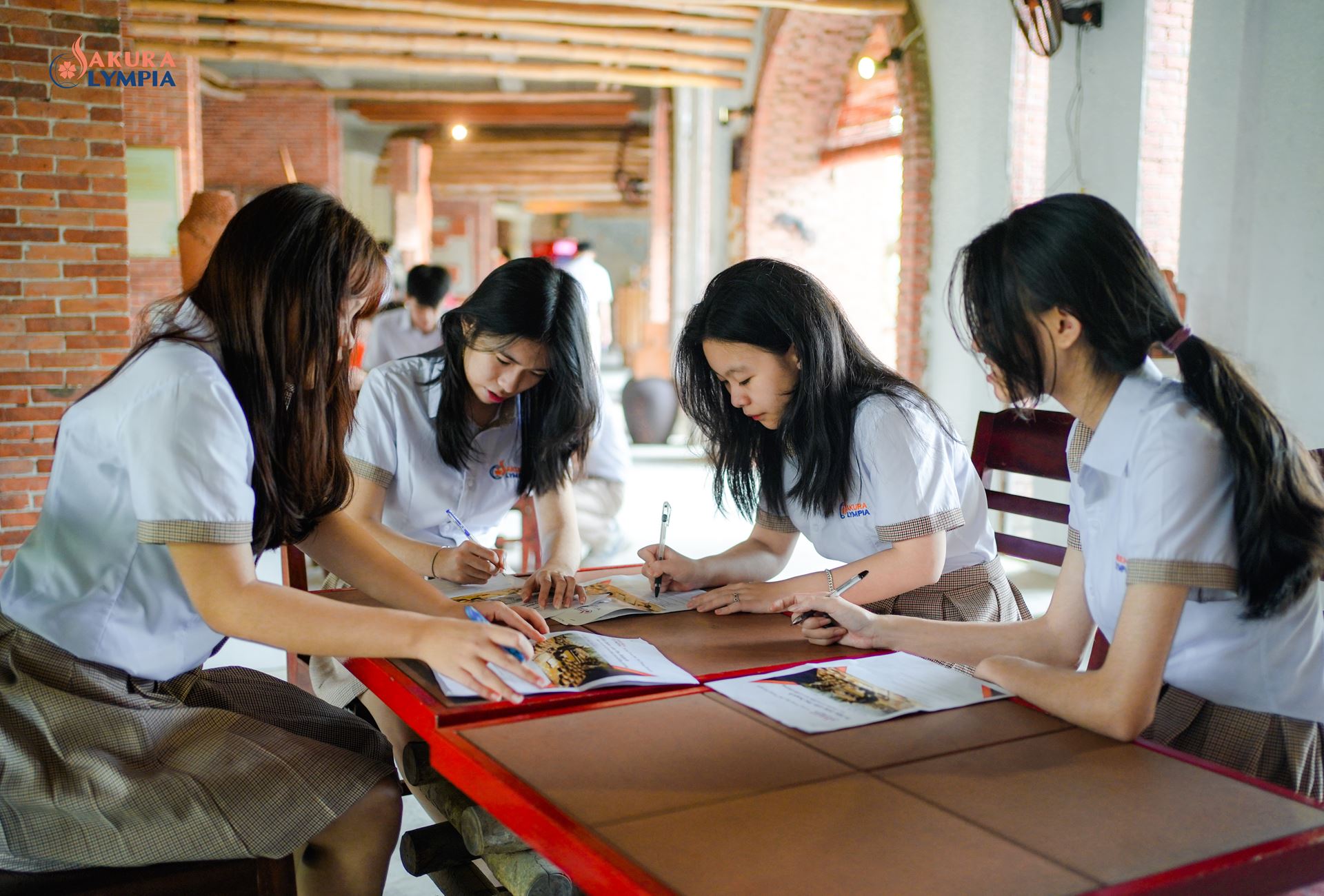
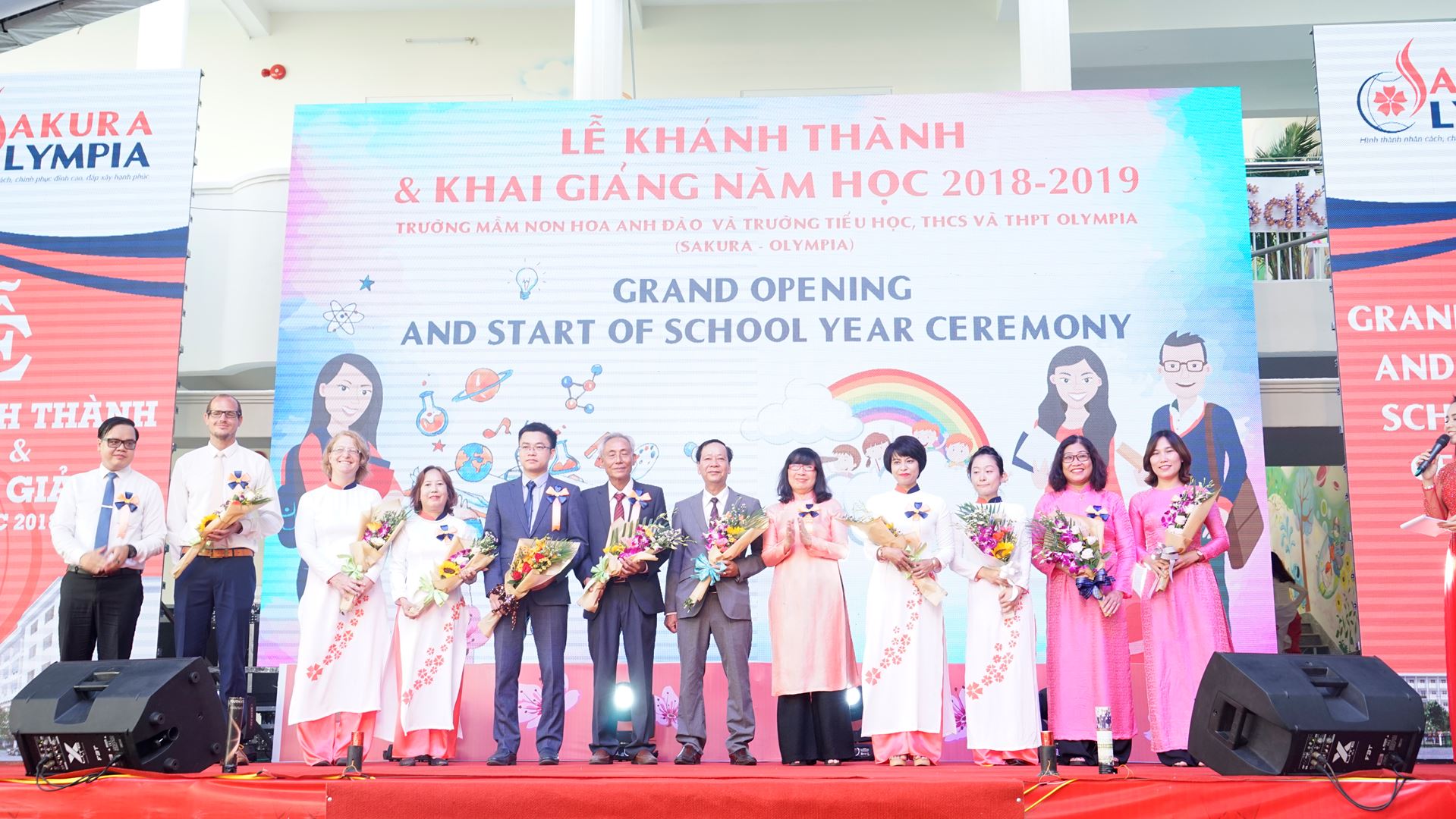
After the opening ceremony, students moved to different learning spaces to begin their series of challenges. During the morning, they took part in Math Challenge, Science Quiz, Creative Language, Chess, and Pickleball. The challenges were organized by age group: Math Challenge and Science Quiz were open to students in Grades 2–12, while Creative Language was open to Grades 2–12, with a Quiz format for Grades 2–5 and presentations for Grades 6–12. This variety created multiple opportunities for students to demonstrate their strengths. A student might stand out when solving a mathematical problem, while another might shine when presenting an idea, developing a strategy on the chessboard, or demonstrating physical skills.
Math Challenge: Bringing Mathematics Beyond the Page
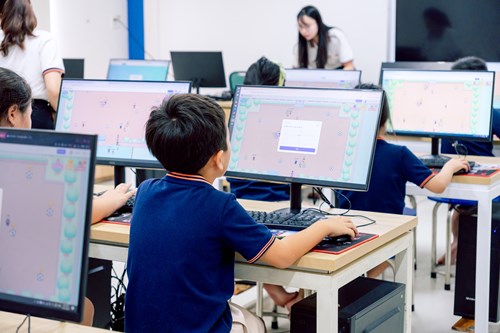
Math Challenge Station
Mathematics is often associated with numbers and formulas. At Iron Scholars Kickoff, however, many questions were presented through familiar real-life contexts, from shopping and calculating costs to observing nature, school activities, and situations connected to Da Nang. The test papers also included percentages, fractions, area, perimeter, HCF/LCM, number sequences, and applied mathematics problems.
The value of this approach lies in the fact that students are not simply required to remember how to calculate. They must determine which mathematical knowledge is needed to solve a particular problem. When a question about discounts, the area of a playground, or the quantity of materials is placed in a familiar context, Mathematics becomes a tool for students to understand a problem, choose an appropriate method, and arrive at a solution.
This represents an important shift from “knowing knowledge” to “knowing how to use knowledge”—a capability that matters both in learning and in everyday life.
Science Quiz: From Scientific Knowledge to Understanding the World
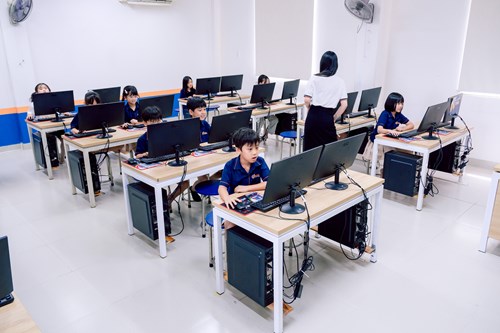
Science Challenge Station
While Math Challenge placed students in situations requiring calculation, Science Quiz presented questions that encouraged them to observe, identify, and connect scientific knowledge.
For students from Grade 6 upward, the questions covered a range of Natural Sciences topics, from identifying living things and biology to the human body, the environment, and applied science. Some questions required students to understand the nature of a phenomenon rather than simply recall terminology; for example, they had to explain how organisms adapt or choose appropriate solutions in situations related to science and health.
Here, science goes beyond asking “What happens?” and encourages students to consider “Why?” and “How can this be applied?” This process helps develop scientific thinking, the ability to explain phenomena, and the capacity to approach real-world issues through the knowledge they have learned.
Creative Language: Knowing Something Is One Thing; Expressing It Is Another
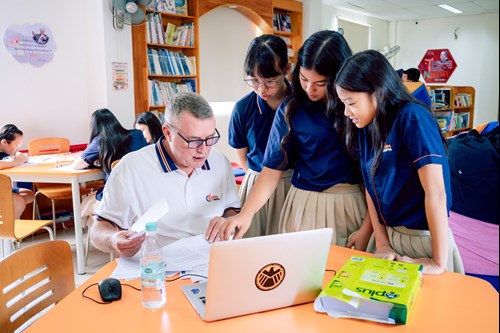
Creative Language Station
An idea becomes truly powerful when others can understand it. Creative Language therefore provides a different space for students to demonstrate their language abilities.
For students in Grades 2–5, the challenge took the form of a Quiz. Students in Grades 6–12 moved on to presentations, combining Vietnamese Literature and English. The questions showed that students were not only assessed on vocabulary and language knowledge, but were also expected to identify emotions in a passage, think about characters, consider ways of expression, and engage with real-life issues. For example, one question asked students to identify details that expressed the writer’s emotions rather than simply describing a scene, while English questions explored topics such as animals, the Internet, trees, and history.
In this way, language becomes a tool for students to think, express, create, and connect with others. Particularly for secondary and high school students, moving from answering questions to presenting ideas creates a greater challenge: they need not only to know what they want to say, but also to know how to communicate it so others can understand.
Chess & Pickleball: When Strengths Go Beyond the Test Paper
Iron Scholars Kickoff does not limit the concept of “ability” to academic tests. Chess and Pickleball provide two additional spaces for students to demonstrate strategic thinking, concentration, reaction, discipline, and sportsmanship.
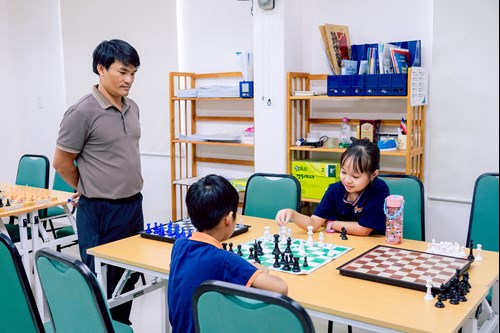
Intense Chess matches
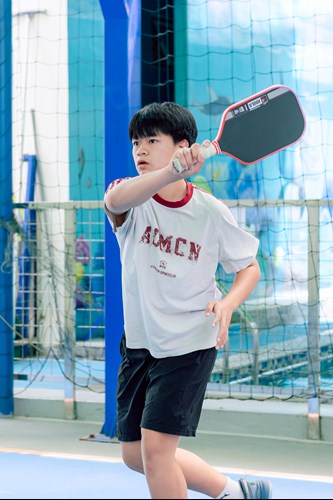
Exciting Pickleball matches
Chess requires players to anticipate several moves ahead, weigh their choices, and adjust their strategies. Pickleball, meanwhile, places students in situations that require quick reactions, coordination, and real-time adaptation. Together, these two arenas highlight an important point: a student’s abilities are not defined only by answering a question correctly, but are also revealed through the way they make choices, take action, and respond to challenges.
Golden Bell Challenge: A Confident Start for Our Young Iron Scholars
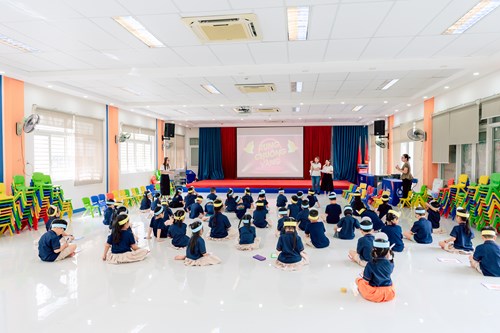
Golden Bell Challenge – a special challenge for Grade 1 students
For Grade 1 SOers taking their first steps into the Iron Scholars journey, the experience took a special form through the Golden Bell Challenge. On this stage, students answered age-appropriate questions that allowed them to review what they had learned while developing concentration, memory, and quick responses to each challenge. More importantly, it gave these young “Iron Scholars” an opportunity to experience the excitement of competition and confidently demonstrate what they know.
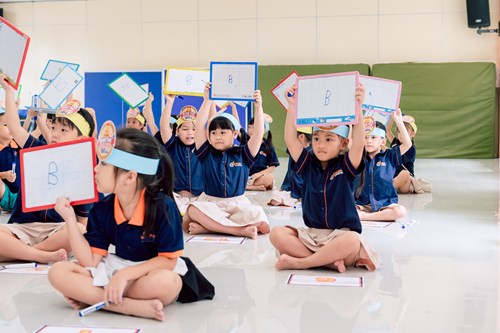
Young Iron Scholars eagerly take on each question in the Golden Bell Challenge.
From the very first questions to the anticipation of the final results, each moment offered Grade 1 students a small step forward in their learning journey. The Golden Bell Challenge is not simply about who wins, but about creating a joyful first experience where students dare to take on challenges, learn to persevere, and discover the joy of learning. It is also Olympia’s way of giving our youngest SOers their first opportunity to step onto the Iron Scholars “arena” with excitement and confidence.
EVERY STUDENT HAS THEIR OWN WAY TO SHINE
Iron Scholars Kickoff does not create a single “measure” for every student. Instead, it offers different challenges that call for different abilities: Mathematics requires logical thinking; Science requires connection and reasoning; Language requires expression and creativity; Chess requires strategy; Pickleball requires reaction and adaptability.
This diversity also reflects the goals of the program: to provide an initial assessment of students’ abilities, encourage effort and healthy competition, and help students discover their strengths. Individual and team achievements were recognized through the “Ironman Star” and “Shining Class” awards, bringing the day of challenges to a close with recognition and encouragement for the journey ahead.
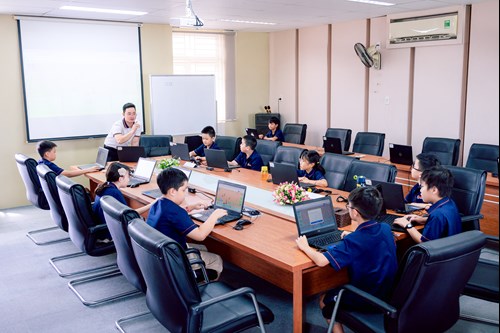
Some students shine through logical thinking.
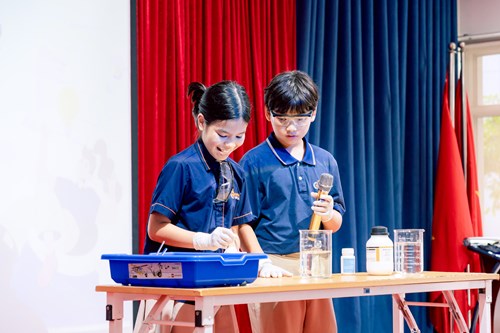
Some demonstrate an ability to connect and reason through scientific problems.
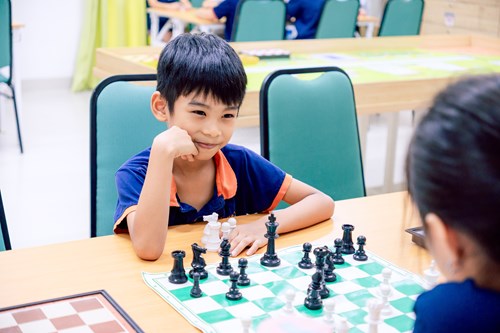
Others demonstrate remarkable strategic thinking.
More importantly, the outcome of a competition does not necessarily lie in who achieves the highest score. For each student, the experience may lead to a different set of reflections: Where are my strengths? How effectively did I apply what I know? How do I tend to approach a new challenge? And what do I need to continue developing? This is the greater value of an assessment experience: not simply measuring results, but helping learners better understand their own learning process.
UNLOCKING POTENTIAL FOR A NEW JOURNEY
Iron Scholars Kickoff marks the end of the review period while opening the door to a new journey of learning in the 2026–2027 school year. After three weeks of refreshing their knowledge, students had opportunities to challenge themselves, apply what they knew, and reflect on their own abilities—to better understand what they know, what they can do, and what they need to continue developing.
This also reflects an important part of Olympia’s educational direction: not simply providing knowledge, but helping students develop learning strategies, independent thinking, and adaptability. In this sense, Iron Scholars Kickoff is more than a competition; it is an opportunity for each student to recognize their strengths and identify the abilities they can continue to build.
Within the spirit of “Autonomous Knowledge - Personalized Journeys,” a new school year does not begin only with new knowledge. It also begins when each student understands where they are and where they want to go.
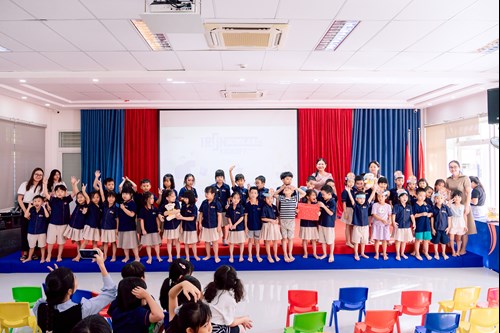
Through the challenges of Iron Scholars Kickoff, SOers can move forward with greater ownership of their learning, greater confidence in facing challenges, and a readiness to unlock new strengths.
Primary News Other

TOUCHING THE MOON 2026: A MOONLIT SEASON OF LOVE

[PRIMARY] GROWING TOGETHER: LEARNING TO PROTECT OURSELVES, RESPECT AND SUPPORT OTHERS
